

Paula McDevitt, Head of Managed Database Services – Being a Neurodiverse DBA and Why the Right Tools Matter
I have dyslexia.
For most of my career, that was simply something I worked around quietly. I learned to double-check everything, to read more slowly than others, and to build little safety nets into the way I worked. I didn’t see it as something that belonged in a conversation about database engineering. It was just part of how I operated.
But the more time I’ve spent leading teams and working in Managed Services, the more I’ve realised something important: neurodiversity itself isn’t the problem. What causes issues is unnecessary cognitive friction.
Database work is detailed, precise and often dense. Many neurodiverse engineers bring exceptional strengths to that environment, pattern recognition, systems thinking, hyperfocus and creative troubleshooting. But the day-to-day mechanics can be draining if the tools and environment aren’t designed with different thinking styles in mind. That’s where tooling genuinely makes a difference. Not as a shortcut or a crutch, but as a form of accessibility.
Before I get into the individual tools, I want to say clearly that the Redgate toolset is excellent. It tackles the kinds of challenges DBAs genuinely face, deployments, drift, performance troubleshooting and release pressure, and it does so in a way that feels practical and considered. The tools are structured, consistent and clearly built with real engineering workflows in mind.
So, what does that look like in practice?
SQL Prompt – Structure and Consistency
SQL Prompt is often the first tool people encounter, and for good reason.
Inconsistent formatting and long, uneven scripts can create unnecessary mental load. When structure constantly changes, your brain must work harder just to interpret what it’s looking at before you even begin thinking about the logic.
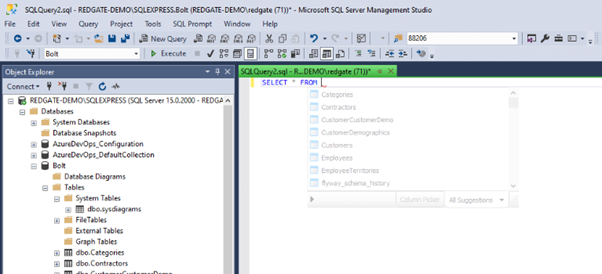
SQL Prompt introduces consistent automatic formatting, predictable layout standards, IntelliSense suggestions for objects and schemas, reusable snippets and proactive code analysis warnings. That consistency matters. When formatting is standardised, engineers can focus on the intent of the code rather than its shape. When object suggestions appear as you type, memory recall becomes less of a barrier. When analysis flags potential issues early, it reduces the background anxiety of wondering whether something subtle has been missed.
It creates clarity, and clarity reduces stress.
SQL Compare – Making Differences Explicit
Comparing two databases manually is cognitively heavy work. Small differences can hide in dense scripts, and lines can look almost identical at a glance. It’s the kind of task that quickly drains focus, particularly for engineers who already find detailed visual comparison exhausting.
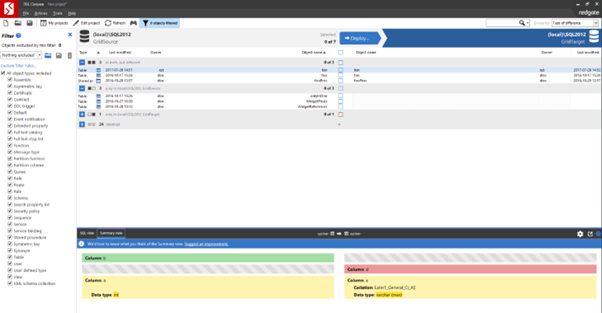
SQL Compare removes that ambiguity by clearly highlighting what has changed and where it has changed. Instead of scanning endlessly, engineers can rely on structured comparison output. The tool surfaces the difference, which means the person can concentrate on making informed decisions rather than hunting for discrepancies.
That separation between detection and judgment makes a real difference.
SQL Data Compare – Confidence Through Process
Data validation is another area where cognitive fatigue can creep in. Manually confirming that two environments are aligned requires sustained attention to detail, and for many neurodiverse DBAs that level of repetition can be draining.
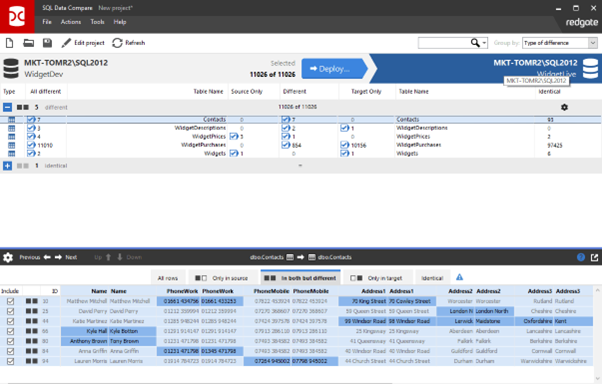
SQL Data Compare turns validation into a repeatable, visual process. Structured comparison grids, clear identification of mismatched rows and synchronisation scripts shift the task from ‘spot the subtle difference’ to reviewing structured output. That isn’t about lowering standards; if anything, it increases reliability by reducing the likelihood of mistakes slipping through.
A Leadership Reflection
As a leader, this matters to me even more.
Not everyone will disclose that they’re neurodivergent, whether that shows up as dyslexia, ADHD, autism or another way of thinking. Some won’t want a label. So rather than waiting for disclosure, we should be designing inclusive engineering environments by default.
That means consistent formatting, clear comparison tools, structured monitoring and reduced ambiguity, the kind of practical support that well-designed tools, including those from Redgate, can provide. Good tooling isn’t just about productivity metrics; it’s about inclusion.
At Coeo, we talk a lot about building environments where engineers can do their best work. That isn’t only about technical standards or service quality. It’s about reducing unnecessary friction so people can focus on what they’re genuinely brilliant at.
Sometimes it isn’t about changing the person.
It’s about changing the friction around them.
Part 3: How We Continue the Conversation
Neurodiversity Celebration Week is a valuable opportunity to pause, learn and share perspectives, but at Coeo, building an inclusive culture is an ongoing commitment we work towards all year round.
We believe that different ways of thinking strengthen teams, spark innovation and help people do their best work. Through open conversations, shared experiences and continued learning, we aim to create an environment where individuals feel understood, supported and valued for who they are.
If this blog resonated with you, or encouraged you to think differently about neurodiversity, we hope it sparks further conversation and reflection. By continuing to learn from one another and champion inclusive ways of working, we can help create workplaces where everyone has the opportunity to thrive.
We’re grateful to everyone who shared their experiences as part of Neurodiversity Celebration Week. Their openness helps move the conversation forward and reinforces our commitment to celebrating different ways of thinking and working.