

Among the many announcements made at FabCon 2026 was improved support for mirroring in Fabric, with support for SAP data now generally available.
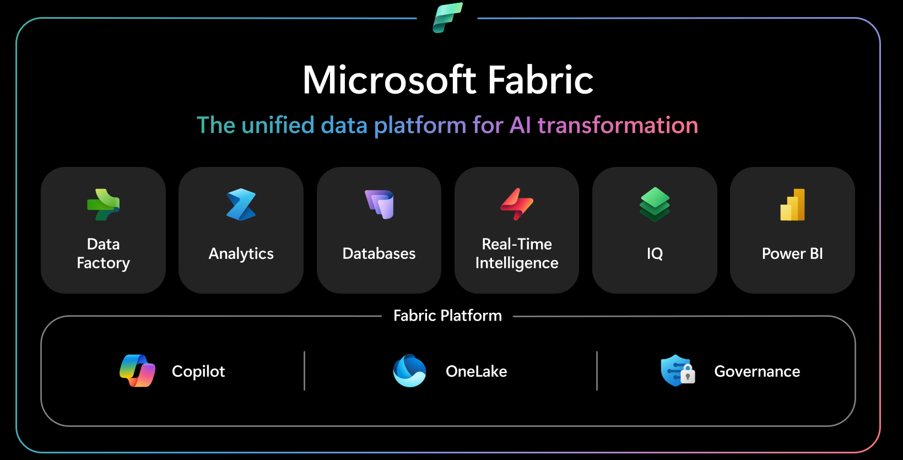
If you’re new to Microsoft Fabric, it is a SaaS analytics platform for end-to-end data workflows with BI reporting and AI built in:
What is Mirroring
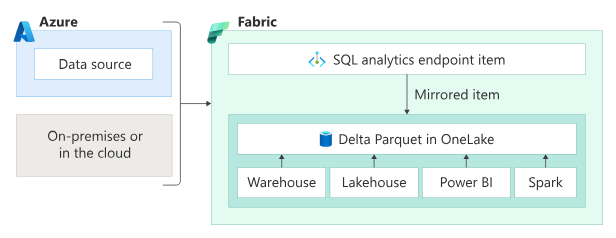
Mirroring in Fabric is a low-cost and low-latency way to unify data from various sources, automatically keeping data in sync. There are 3 methods:
- Database Mirroring: where data is continuously replicated into Fabric’s OneLake, converting to Parquet format (choose entire database or individual tables):
- Metadata Mirroring: where no data is physically moved, and only metadata is mirrored. This uses shortcuts, meaning source data remains but is easily accessible by Fabric.
- Open Mirroring: where change data is mirrored based on the open Delta Lake table format.
Benefits of Fabric Mirroring
- Simple and intuitive to enable, with no complex/costly building of ETL pipelines
- Fully managed – hosting/maintaining/managing replication is no longer a worry
- Row-level and object-level security keeping data highly secure
- Cross-database queries – combine with any other data in Fabric
- Free up to a capacity-based limit. Microsoft Fabric – Pricing | Microsoft Azure
- Data Engineering ready – manage data as Spark using a lakehouse
- Data Science ready – full workflows for Machine Learning and modelling
Mirroring SAP data
Fabric mirroring for SAP data combines with SAP Datasphere. An initial snapshot and changed records are extracted and loaded into an Azure Data Lake Storage (ADLS) Gen2 container:
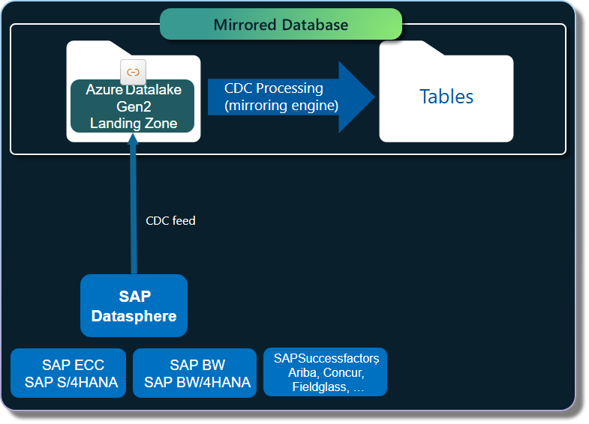
All SAP data types offered by SAP Datasphere are supported, including but not limited to: S/4HANA, ECC, BW/4HANA, and BW.
How can we help?
We are a Microsoft Fabric Featured Partner, specialising in Data Platform, Data Analytics and AI.
If you are interested in leveraging unified data, including data from SAP, or looking to move from legacy reporting systems such as SAP Business Objects, talk to Coeo today!